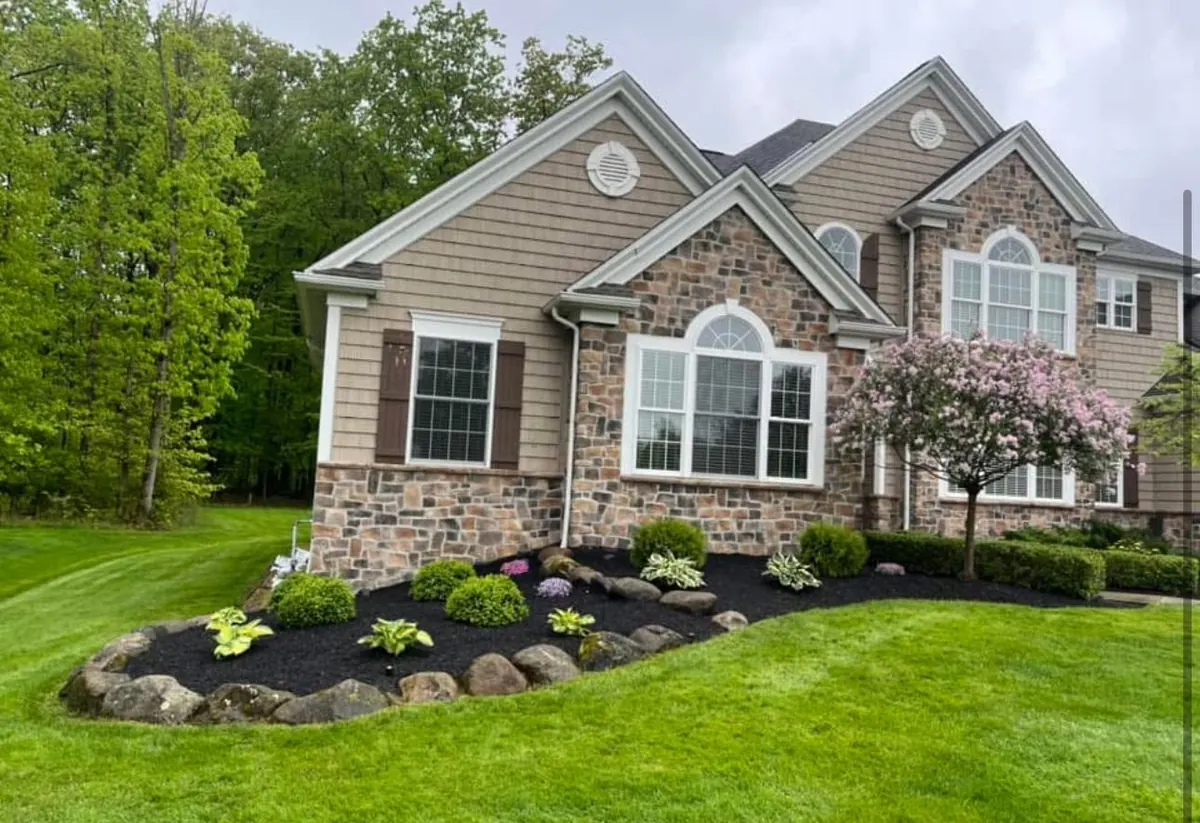
Every January homeowners in Aurora and Chagrin Falls start thinking about what they want to do differently in the yard this year. Sometimes it's "rip out the boxwoods our last landscaper put in." Sometimes it's "we need to actually use the backyard." Sometimes it's just "this looks dated."
Here's what we're actually doing on Northeast Ohio properties in 2026 — what's hot, what's quietly going away, and what makes sense for our specific climate and soils. Not Pinterest fantasy designs. Real choices that hold up in Geauga and Portage County weather.
1. Native plants are finally mainstream
Five years ago, suggesting natives to a client was a tough sell. People wanted boxwoods, knockout roses, and ornamental pears — the suburban defaults. In 2026, it's flipped. More than half of our new landscaping clients ask about native plants by name before we bring it up.
And it's about time. Natives evolved here. They handle our clay soils, our freeze-thaw cycles, our lake-effect weather, and our summer dry stretches without babying. They feed pollinators and songbirds. And they look right against the woodland edges that border so many Chagrin Valley properties.
Ohio natives we're planting heavily in 2026
- Serviceberry (Amelanchier) — white spring flowers, edible berries, brilliant orange-red fall color, tops out around 15-20 feet. Perfect small tree for foundation plantings.
- Eastern redbud — magenta flowers in April before the leaves come out. A Northeast Ohio classic that's having a renaissance.
- Winterberry holly — drops its leaves and shows bright red berries against December snow. Stunning, and the birds love it.
- Little bluestem — native grass that turns copper-orange in fall and holds its color through winter. Replaces miscanthus for a more naturalized look.
- Coneflower, black-eyed susan, bee balm — the workhorse natives that bloom from June through September with almost zero maintenance.
- Switchgrass — vertical structure, great winter interest, handles wet clay and drought equally well.
- Oakleaf hydrangea — Ohio-friendly native hydrangea with huge white panicles and burgundy fall foliage.
The shift toward natives also reflects a real change in how people want their yards to function. Less manicured, more alive. We're seeing fewer requests for "perfect rectangles of boxwood" and more requests for plantings that bring in butterflies and birds.
2. Low-maintenance is the brief, not the upsell
Every client wants low-maintenance now. Not "low-ish." Genuinely low. Younger homeowners moving into the Chagrin Valley from Cleveland and Akron specifically don't want to spend their Saturdays weeding. Older clients who've maintained big estates for thirty years are downsizing the labor, not the property.
Here's what actually delivers low-maintenance in Northeast Ohio:
Right plant, right place
Most maintenance is caused by plants that don't belong where they were put. A shade-loving hydrangea baking in full sun is going to fight you forever. A rhododendron stuck in heavy wet clay is going to die slow. The cheapest way to reduce maintenance is to put the right plants in the right spots from day one. That's design, not products.
Layered plantings instead of mulch deserts
Counterintuitively, denser plantings need less weeding. When plants cover the ground, weeds can't establish. A bed with 60% plant coverage and 40% mulch needs maybe one weeding a season. A bed that's 90% mulch with a few lonely shrubs is a weed factory.
Slow-growing structural shrubs
Hicks yew, dwarf Chamaecyparis, oakleaf holly — slow-growing shrubs that keep their shape for years without aggressive pruning. The opposite of the fast-growing privet hedge that needs trimming three times a summer.
Smart irrigation
Drip irrigation on a timer for landscape beds. Targets water at the roots, eliminates the overhead sprinkler waste, and quietly handles the August dry stretches that kill new plantings. Not flashy, but it's the single highest-leverage maintenance reduction we install.
3. Hardscape integration — patios as the real upgrade
The single biggest landscape investment most Aurora and Chagrin Falls homeowners are making in 2026 is hardscape — patios, walkways, retaining walls, and outdoor living spaces. Not flower beds. Hardscape.
Why? Because hardscape is forever. A well-built patio in 2026 will still look great in 2046. And people are genuinely using their backyards more than they did a decade ago.
What's in
- Large-format pavers — 24" x 24" and bigger. Cleaner lines, fewer joint lines, more modern feel. Replacing the busy 4-piece random patterns of the 2010s.
- Natural stone — Pennsylvania bluestone, local sandstone. Especially in the Chagrin Valley, where stone homes are common, stone hardscape just reads right.
- Permeable paver systems — better for our drainage issues, lets water through instead of sheeting toward the foundation.
- Integrated seat walls — built-in seating around fire pits or patio edges. Free seating, sculptural, no patio furniture to drag in for winter.
- Outdoor kitchens, scaled down — the giant outdoor kitchen trend has cooled. We're building smaller, smarter setups: a built-in grill, a counter, a small fridge. Used way more than the $40K version.
What's out
- Stamped concrete (looks great year one, looks tired by year five — and our freeze-thaw cycles are brutal on it)
- Tiered fountains in the front yard
- Tiki torches and "tropical" themes that don't suit our region
4. Outdoor living that respects the seasons
The smartest 2026 designs in Bainbridge, South Russell, and Auburn account for the fact that we have four real seasons here, including a long winter. That changes what makes sense outside.
Year-round structure
Evergreens placed thoughtfully — not as a fortress wall around the foundation, but as anchors that hold the view together in February when everything else is sticks. Boxwood, dwarf spruce, inkberry holly.
Fire features over water features
A gas fire pit extends the patio season from late March through mid-November. A water feature gets shut down by Halloween and is dead landscape for six months. Fire wins in our climate.
Winter interest
Plant choices that earn their keep in January — red-twig dogwood, ornamental grasses left standing through winter, evergreen ground covers, plants with persistent berries. The Chagrin Valley is gray and brown for a long time. A few intentional pops of color matter.
"A great Northeast Ohio yard isn't designed for one Instagram month in June. It's designed for the gray February afternoon when you still want to look out the window."
5. The quiet trend: properties that actually fit the house
The biggest shift in 2026 isn't a specific plant or material — it's that homeowners are finally rejecting cookie-cutter landscape design. We're not putting the same three-shrub foundation planting in front of every house anymore.
A 1920s stone Tudor in Chagrin Falls gets a different design than a new build in Aurora. A century farm in Auburn gets a different palette than a contemporary in Bainbridge. This sounds obvious but it wasn't standard practice for a long time. The "drop in a Knock Out rose and call it done" era is fading.
What that looks like in practice:
- Plant palettes chosen to complement the house's color and architecture
- Bed shapes that follow natural grade and architecture instead of fighting them
- Plantings that mature into the property over 5-10 years instead of looking "done" on install day and overgrown by year three
6. The maintenance question
None of these trends mean anything if the yard isn't maintained right after install. We see beautiful 2-year-old landscape designs ruined by clients who fire the maintenance crew to save a few bucks and let the wrong shrubs get hacked at the wrong time of year.
If you're investing real money in a 2026 landscape redesign, plan for the maintenance from day one. Ongoing property maintenance and seasonal cleanups and pruning are what protect the investment. Pruning a serviceberry at the wrong time can wipe out next year's bloom. Letting weeds run for one season in a young naturalistic planting can set you back two years.
The other side of this: a good design reduces long-term maintenance costs. Properties we've redesigned to be lower-maintenance often cost less per year to maintain after year two than the cluttered, mismatched yards they replaced.
Where to start if you're planning a 2026 project
If you want a redesign on the calendar for spring or summer 2026, now is the right time to start the conversation. Good installs book out months in advance, and the plants we'd specify for a May install need to be sourced in February.
Our process is straightforward:
- We walk the property with you and listen to what isn't working
- We sketch a plan that fits your house, your soils, and your maintenance appetite
- We quote it transparently — labor, materials, and plants broken out
- We install it the right way, and we're around to maintain it after
Start your 2026 landscape project the right way.
Free design consultation for properties across Aurora, Chagrin Falls, Bainbridge, South Russell, and Auburn.
Book My Consultation