7 Red Flags When Hiring a Landscaper in Northeast Ohio
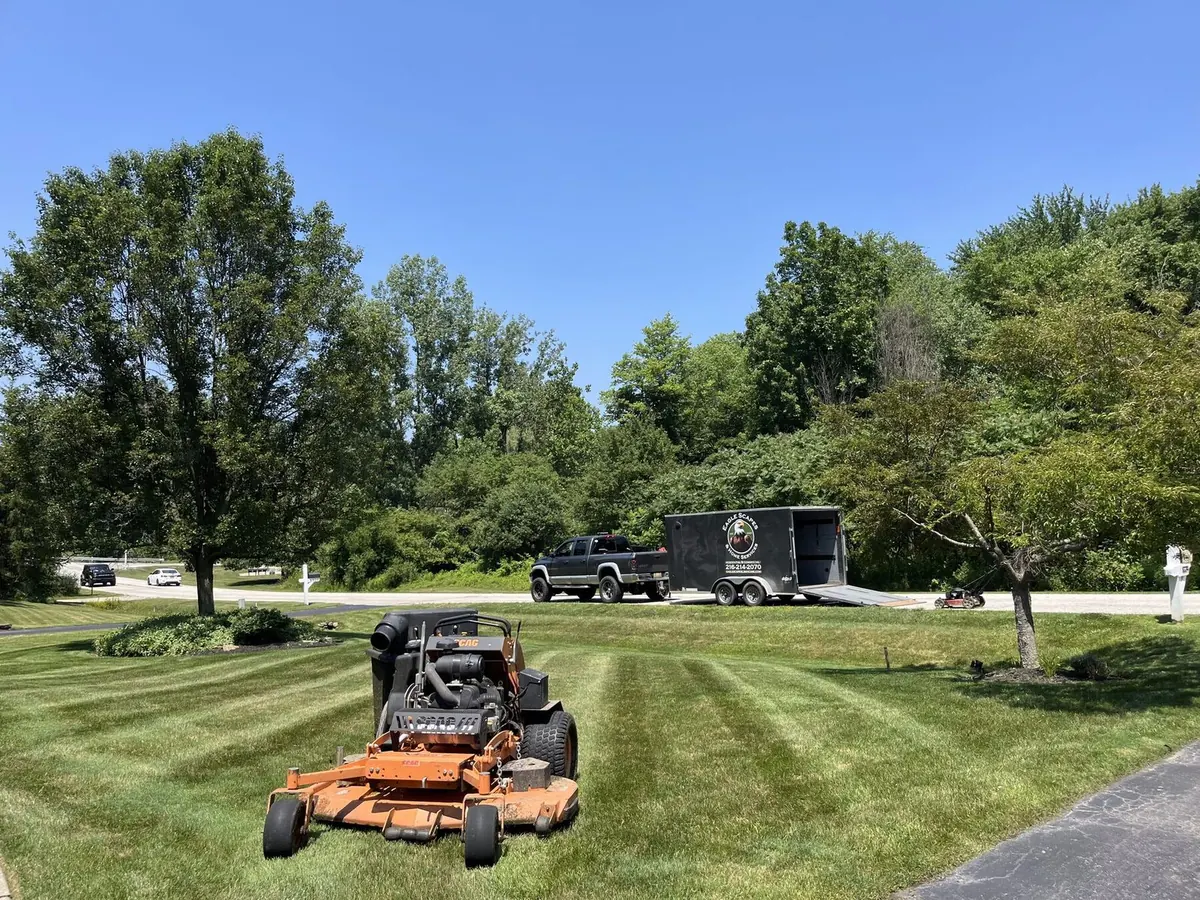
The seven biggest red flags when hiring a landscaper in Northeast Ohio are no written estimate, deposits over 50% upfront, no proof of insurance, door-knocking after storms, quotes 30%+ below others, no before/after portfolio, and vague timelines. Always get three written quotes and ask for a Certificate of Insurance.
Every spring I get a few calls from folks in Aurora and Chagrin Falls who already hired someone, paid a big deposit, and never saw them again. By the time I'm on the porch looking at half-finished mulch beds or a retaining wall that's already leaning, the money's gone and the homeowner is stuck. This guide is the talk I give every one of those neighbors so they don't get burned next time. I'm Nathan Meyer, owner of Eagle Scapes & Home Services, and I've been doing landscaping in this corner of Northeast Ohio since 2023. Here's exactly what to watch for.
What are the biggest red flags when hiring a landscaper in Northeast Ohio?
The biggest red flags are no written estimate, deposits over 50%, no Certificate of Insurance, door-knocking sales pitches after storms, quotes 30% below competitors, no before/after photos of local work, and vague start dates. Any one of these alone is concerning. Two or more together almost always ends in tears.
I've been on this side of the truck long enough to see the same patterns over and over. Most homeowners assume the worst landscapers are easy to spot because they look sketchy. The truth is, the ones who burn people the hardest usually have a clean truck, a polo shirt, and a polished sales pitch. The red flags are in the paperwork and in the details, not the appearance.
Start with the estimate. If a contractor won't put it in writing, walk away. If the deposit they're asking for is more than what the materials would actually cost, walk away. If they can't text you a Certificate of Insurance within an hour, walk away. None of this is unreasonable to ask, and any legitimate company in Aurora, Chagrin Falls, or Bainbridge will hand it over without flinching. The sketchier the company, the more they'll act like you're being difficult for asking. That reaction itself is a red flag.
The other thing I tell people: trust your gut on the second call. The first call everyone is on their best behavior. By the second call, if they're dodging questions about timeline, materials, or insurance, that's who they really are. A real contractor wants you informed because informed customers pay on time and refer their friends.
Why does "locally owned" matter for a landscaping company?
Locally owned means the person who quoted your job is the same person doing the work. There's no telephone game between a salesperson, an office manager, and a sub-contracted crew. Quality stays consistent, the price you got is the price you pay, and accountability lives in one place: with the owner whose name is on the truck.
Here's the dirty secret of bigger landscaping outfits: a lot of them sell jobs and then sub the actual work out to two or three crews they don't directly employ. The salesperson tells you one thing. The crew lead hears something different from dispatch. The guys on the shovels have never seen your property. By the time the mulch is down, you've got the wrong color, the wrong depth, and edging that wasn't in the quote.
When I show up to a property in South Russell or Auburn, I'm the one who walked it, quoted it, and now I'm the one putting plants in the ground. If something needs to change mid-job, you talk to me directly, not a call center. If a stone gets chipped, I'm the one replacing it. If the timeline shifts because of rain, you hear it from me at 7 a.m., not from a dispatcher at 4 p.m.
This matters more than people realize for warranty work too. A year from now when you've got a paver settling or a shrub that didn't make it, you want the original person standing there. With sub-contracted crews, that crew might not even work for that company anymore. With an locally owned outfit, the same guy comes back. That's not a sales pitch, that's just how a small business has to operate to survive.
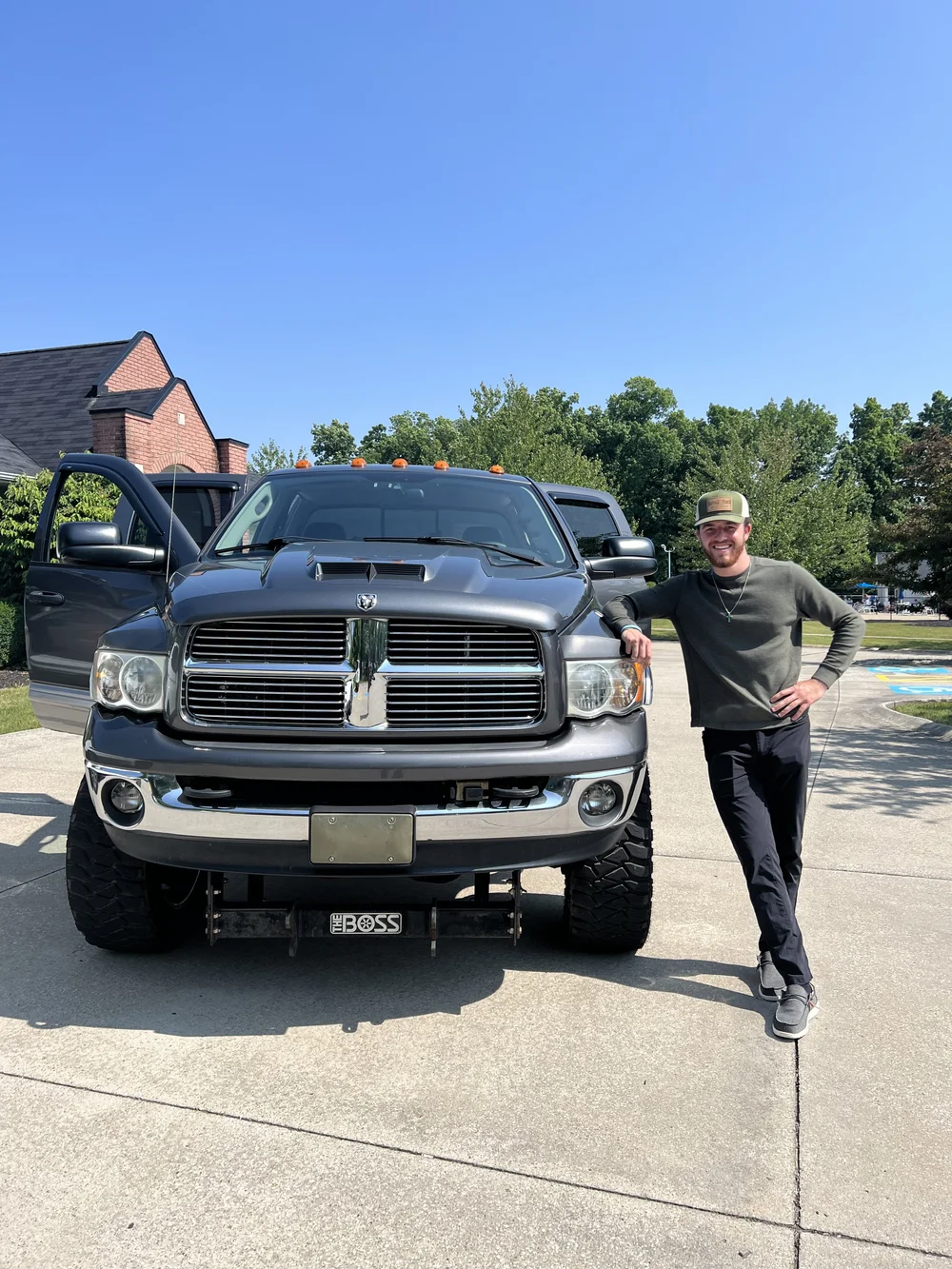
How can you verify a landscaper is legitimate before hiring?
Verify three things: business registration, insurance, and reviews from local properties. Look the company up on business.ohio.gov to confirm they're a registered LLC. Ask for a Certificate of Insurance emailed directly from their agent. Then check Google reviews and filter for addresses in your actual area, not generic five-star reviews from out of state.
Ohio doesn't require a state-wide landscaping license, which surprises people. That makes it even more important to do the verification yourself. The good news is it takes about ten minutes total. Pull up the Ohio Secretary of State's business search and type in the company name. If they're not registered, that's a hard stop. A guy operating out of a personal truck with no business entity has no insurance, no warranty backing, and no recourse if something goes wrong.
For insurance, don't accept a screenshot or a photo of a card. Ask them to have their insurance agent email you a Certificate of Insurance with your name and property address listed. This takes the agent about ninety seconds. It costs the contractor nothing. If they refuse or stall, that tells you the policy either doesn't exist or doesn't cover what they're claiming. General liability should be at least $1 million, and workers' comp should be in force if they have any helpers.
For reviews, look for specifics. A real review mentions the street, the type of work, and sometimes the season. Bulk five-star reviews with no detail are often purchased. Look for photos in the reviews too. Customers in Aurora and Chagrin Falls love showing off finished projects, so a legitimate local company will have customer photos scattered through their Google profile.
What should be in a written landscaping estimate?
A proper estimate lists scope of work, materials by type and quantity, labor cost, start and finish dates, payment schedule, warranty terms, and proof of insurance. It should fit on one or two pages and be itemized clearly. If the quote is one number scribbled on a business card, you have no protection and no way to compare apples to apples.
I've seen estimates from competing companies that say "landscaping — $4,800" and nothing else. That's not an estimate, that's a wish. When the job is half done and the crew says "oh, that wasn't in our quote, that's extra," the homeowner has no leg to stand on because nothing was specified.
Here's what a real landscaping estimate from us looks like. It names every plant by species and quantity. It specifies mulch type, color, and cubic yards. It lists the edging style and linear feet. It separates labor from materials so you can see where the money is going. It states the deposit amount, the balance due, and when each is due. It gives a window for the start date and an expected duration. And it includes our warranty terms in writing — usually one year on plant material and three years on hardscape installation.
The reason this matters isn't paranoia. It's that landscaping has a lot of judgment calls. What does "clean up the beds" mean? Does that include pulling out the old liriope or just edging? Does "fresh mulch" mean two inches or four? Without specifics in writing, you and the contractor are guaranteed to disagree on at least one thing, and the contractor wins every disagreement that wasn't documented.
When is a low bid actually a warning sign?
A bid that comes in 30% or more below the other quotes is almost always a warning sign. It usually means the contractor is uninsured, using inferior materials, skipping prep work, or planning to upcharge later with "unexpected" costs. Get three estimates and pick from the middle range — that's where serious, properly insured local companies live.
Everyone wants to save money. I get it. But landscaping isn't a commodity like buying gasoline where cheap and expensive are the same product. A $2,400 mulch and bed cleanup job and a $1,400 mulch and bed cleanup job are not the same work, even if the words on the quote sound similar. Somebody is cutting somewhere, and you'll find out where about three months in when the weeds explode through thin mulch or the edging starts heaving.
The most common cuts I see on lowball bids: shredded hardwood instead of double-shredded, two inches of mulch instead of three, no pre-emergent applied, no soil amendment, no fabric or proper bed prep, and stick-edged beds instead of spade-cut edges. Each of those saves the contractor a little money and shortens the life of your job by a full season. By the time you'd normally need a refresh, you need a full redo instead.
Then there's the upcharge play. Some companies lowball the initial quote knowing they'll find "issues" on day one — rocky soil, root barriers, irrigation lines — that conveniently weren't in the scope. Suddenly that $1,400 job is $2,800. If you'd just hired the middle quote at $2,200 to begin with, you'd be done already and not arguing in your driveway.
Red flag vs. green flag at a glance
| Red flag | What it means | What to do instead |
|---|---|---|
| No written estimate | Verbal-only = no accountability | Get an itemized written quote |
| Asks 50%+ deposit upfront | Cash-flow problem or scam | Standard 10-30% for materials |
| No COI / proof of insurance | One injury and it's your problem | Ask for a Certificate of Insurance |
| Door-knocking after storm | Often out-of-state scam crews | Check local Google reviews |
| Quote 30%+ below others | Cutting labor or materials | Three quotes; the middle is safest |
| No before/after portfolio | Can't prove their work | Ask for 3 local references |
| Vague timeline | Crew not booked or overcommitted | Specific start and finish dates |
Want a written estimate from an locally owned local?
I'll walk your property in Aurora, Chagrin Falls, Bainbridge, South Russell, or Auburn, and send you an itemized quote. No deposit games, no sub-contracted crews.
Request Free Estimate Call (216) 516-7730Frequently asked questions
How do I check if a landscaper is licensed in Ohio?
Ohio doesn't require a state-wide landscaping license, but legitimate companies should be registered with the Ohio Secretary of State as an LLC or corporation. Look them up at business.ohio.gov. For any work involving irrigation, electrical, or structural elements like retaining walls over 4 feet, additional permits and licensed trades are usually required.
What's a normal deposit for landscaping work?
For most residential landscaping in Northeast Ohio, expect a deposit between 10% and 30% to cover material orders. Anything above 50% upfront is a major red flag. Reputable locally owned companies like Eagle Scapes typically only ask for a material deposit and bill the balance after walkthrough.
Should I get more than one landscaping estimate?
Yes. Always get three written estimates so you can spot outliers. If one quote is 30% lower than the others, that company is usually cutting corners on materials, skipping insurance, or planning to upcharge later. The middle quote is almost always the safest bet.
How do I verify a landscaper's insurance?
Ask for a Certificate of Insurance (COI) showing general liability and workers' comp. A legitimate company can have their insurance agent email this directly to you, listing your name and property address. If they hesitate or send a screenshot, walk away.
Are door-knocking landscapers legitimate?
Almost never. After storms or in spring, out-of-state crews knock doors offering "leftover material" discounts. They take a deposit and disappear. Local locally owned companies in Aurora, Chagrin Falls, and Bainbridge don't need to knock doors because referrals fill their schedule.
Why does locally owned matter for landscaping?
When you hire an locally owned company, the person who quoted the job is the person doing the work. There's no telephone game between sales, manager, and crew. Quality stays consistent because the owner's name is on every project.
What should a written landscaping estimate include?
A real estimate spells out scope of work, materials by type and quantity, labor cost, start and finish dates, payment schedule, warranty terms, and proof of insurance. If the quote fits on a napkin, that's the warning sign.