
Thin patches, water pooling after rain, turf that browns first every August — that is compacted clay, and September is the one window a year to fix it properly.
Every town we serve sits on heavy Northeast Ohio clay. Clay compacts — under mowers, under foot traffic, under its own weight — and compacted soil chokes off water, air, and root growth.
You do not see compaction directly. You see the symptoms: bare patches that never fill in no matter how much seed you throw at them, puddles standing a day after a storm, moss creeping into the shady side, and a lawn that goes crispy in a dry stretch while your neighbor's stays green. Fertilizer will not fix any of that, because the problem is underneath the grass, not in it.
Core aeration pulls thousands of soil plugs out of the ground and gives the root zone somewhere to expand. Follow it immediately with seed and the openings become perfect seed-to-soil contact. That combination is the single highest-return thing you can do for a struggling lawn in this region.
Request a Quote
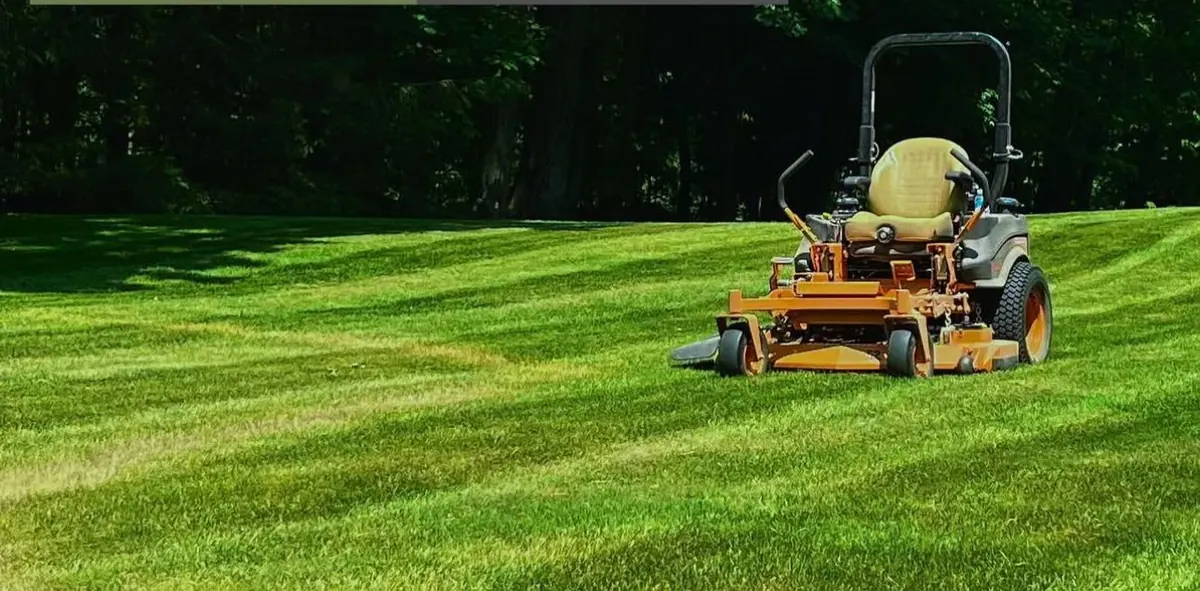

Two directions matters. A single pass leaves too much untouched ground; crossing the lawn doubles the hole count and gets you an even stand instead of stripes of new grass.
Book Your Slot
Fall seeding beats spring seeding badly in this climate, and it is not a matter of preference.
In September the soil is still warm from summer, so seed germinates fast, but the air has cooled and rain is more reliable — new seedlings are not fighting to survive. Crabgrass, which chokes out spring seedings, is done for the year. And the new grass gets six to eight weeks to build roots before the ground freezes.
Spring seeding runs into the opposite of all of that: crabgrass competition, oncoming summer heat, and a direct conflict with the pre-emergent your lawn actually needs in April. Most spring seed money is wasted money here.
One practical consequence: if we aerate and seed in September, do not put down pre-emergent the following April on those areas — and if you already applied pre-emergent this past spring, tell us, because it can still block germination.
Get a Free EstimateLocally owned and running a trained crew across Geauga and Portage County.
Aeration & Overseeding in Aurora
Aeration & Overseeding in Chagrin Falls
Aeration & Overseeding in Bainbridge Township
Aeration & Overseeding in South Russell
Aeration & Overseeding in Auburn Township
Aeration & Overseeding in Mantua
Late August through the end of September is the window, and it isn't close. Soil is still warm enough for fast germination, night temperatures have dropped, and crabgrass has stopped competing. Seed put down in that window has 6 to 8 weeks to root before the ground freezes. Spring seeding fights crabgrass, summer heat, and the pre-emergent you actually need in April - most of it fails.
For most residential properties in our service area it runs $350 to $750. The spread comes down to lot size, how many obstacles the machine has to work around, and how heavy the seed rate needs to be. Under a quarter acre usually lands near the bottom; an acre-plus rural lot in Auburn or Mantua sits at the top. We quote from a walkthrough, not square footage off a map.
Northeast Ohio sits on heavy clay. Clay compacts under foot traffic, mowers, and its own weight, and compacted soil blocks water, air, and roots. You see it as thin patches that never fill in, water pooling after rain, and turf that goes brown first in a dry August. Core aeration pulls actual plugs of soil out and gives the root zone room to breathe - it is the single highest-return thing you can do for a struggling lawn here.
A turf-type tall fescue blend for most properties, usually mixed with perennial ryegrass. Tall fescue roots deep, which matters in clay, and it handles both our summer dry spells and the shade under mature Chagrin Valley trees far better than the bluegrass-heavy mixes sold at big-box stores. Heavy-shade areas get a different blend.
Core aeration, always. Spike aerators just punch holes and push soil sideways, which makes compaction worse in clay. We pull 2 to 3 inch cores and leave them on the surface to break down - they filter back into the holes over the next couple weeks and feed the soil as they go.
Keep the top inch of soil moist for the first two to three weeks - short, frequent watering beats one long soak. Hold off mowing until the new grass reaches about 3 inches, then cut high. And skip any weed-and-feed or pre-emergent product until the following spring; those chemicals stop new grass seed from germinating just as effectively as they stop crabgrass.
Want the deeper version? Read our guide on when to plant grass seed in Northeast Ohio, or see how aeration fits into weekly property maintenance.
The aeration window is about five weeks long and the schedule is first-come. Get your property on the list.